Read the Note, Then Watch the Movie: A Festivalgoer’s Guide to the Little Paragraph That Tells the Truth
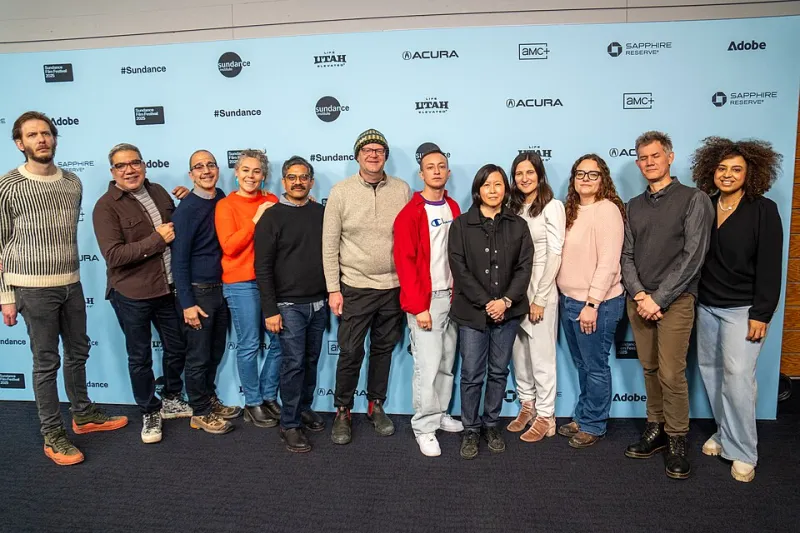
Photo: Bryan Berlin, CC BY-SA 4.0, via Wikimedia Commons
You buy the ticket, you scan the lineup, you find the title you can actually pronounce. Then you get to the program note: usually a small block of type wedged between a synopsis and a content warning. At a 2026 festival, it is tempting to treat that paragraph as filler—something to read while the line snakes toward the door. For an independent film, though, the program note is often the most direct piece of communication the filmmakers get. It is not a review. It is not a trailer. It is a promise, an apology, and a map, all printed in the same font.
The note is doing three jobs at once
Program notes are written after a film is selected, which means they are already speaking to an audience that has said yes. That changes the tone. The synopsis sells the plot. The note sells the experience and quietly explains the conditions. When a director writes that the film was shot in nineteen days across three states, that is a boast and a disclaimer. It says: look what we pulled off, and please forgive the seams. When a producer thanks a film commission, a rental house, and a post-production facility by name, you are reading a budget document in disguise.
Influences are a compass, not a résumé
One of the fastest ways to read a director’s note is to look at the names they choose. A mention of Kelly Reichardt or Chantal Akerman is not random. It tells you the film wants patience, landscape, interiority. A nod to early Linklater suggests talk, drift, and a certain looseness. These references are a compass for the movie’s rhythm. Generic phrases like ‘a bold new voice’ or ‘a cinematic rollercoaster’ are marketing weather. Specific names, specific filmmakers, specific eras—those are the director telling you what kind of movie they think they made.
The thank-you list is a budget in plain sight
Scan the acknowledgments. A grant from a state arts council. A local film office. A camera rental house. A post house that handled color. A sound mixer who worked ‘on weekends.’ Each name is a clue about how the film survived. ‘Additional photography’ means the original shoot did not cover everything. ‘Completed over several years’ means money arrived in bursts. ‘With support from friends and family’ is not just sweetness; it is a financing strategy. And what is missing can be just as loud. No editor thanked? No composer? No festival lab? Maybe the note is short, or maybe the director is signaling that the film was a solo sprint.
Verbs reveal the scale
Listen to the verbs. ‘We shot’ suggests a team. ‘I shot’ suggests a smaller footprint. ‘We built’ a set sounds like production design; ‘we found’ a location sounds like luck and scouting. ‘Our crew wore many hats’ is the polite version of ‘we had no money.’ ‘Shot on location in’ a specific town can be a point of pride and a practical explanation for why the film looks the way it does. The note is not going to say the production ran out of cash. It will say ‘the film was completed with the help of a community,’ and it expects you to understand both the gratitude and the constraint.
A quick pre-screening checklist
Before the lights go down, read the note twice. First for information: who wrote it, where the film was made, how long it took. Second for tone: is the writer humble, defensive, playful, or exhausted? Count the specifics. A note with exact numbers—days, locations, crew size, labs—tends to come from someone who was there. A note with only adjectives may have passed through several hands. Look at the last line. ‘We hope you enjoy the film’ is a host. ‘Thank you for spending your time with us’ is a handshake. Both are fine. They tell you different things.
Read it again after the credits
The real test comes after the movie. A program note is not a prediction; it is a set of clues you can check. Did the intimacy the director promised actually arrive? Did the nineteen-day shoot show up as urgency or as haste? Did the influences feel like a conversation or a costume? At a 2026 festival, where small films are competing for attention against everything else on your phone, the note is one of the few places where the filmmakers speak without a marketing team between you and them. Read it before. Read it after. Then argue about it in the parking lot. That is the festival experience.