The Cut That Makes You Cry: Three Indie Editors Who Find the Heart in the Timeline
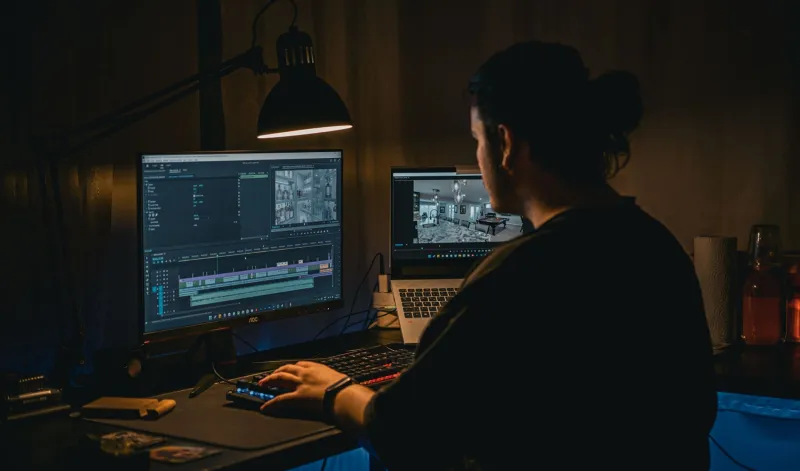
Editing is the part of filmmaking that gets called invisible until a movie feels wrong. Then everyone suddenly has an opinion about it. In independent film, the editor is often the last person who can save a scene, sharpen a performance, or admit that the script's best idea is actually a look. That is why Kardia Reel keeps returning to the cutting room. The frame may be what you see, but the cut is what you feel.
The pulse is not the pace
A common misconception about indie editing is that low budgets demand speed. Faster cuts, more coverage, keep the story moving. But the editors shaping the most interesting American independent films right now tend to argue the opposite. They talk about rhythm as a kind of breathing, not a metronome. They talk about restraint as a creative choice, not a limitation. And they talk about heart as something you protect in the timeline, especially when a producer, a festival cut, or a test screening wants to sand it down.
That work rarely shows up in a trailer. It shows up in the way a conversation pauses before the lie. It shows up in the reaction shot you almost cut. It shows up in the sound of a refrigerator humming under a family argument. Here are three rising editors whose names deserve a spot on your radar, and whose choices explain why some micro-budget films stay with you for weeks.
Nia Calderón: The rhythm of a held breath
Chicago-based Nia Calderón came up through documentary shorts and regional commercials before moving into narrative features under one million dollars. Her work has a distinctive patience. She is not afraid of a long take, but she is ruthless about where a long take begins and ends. In one family drama she cut, a character enters a kitchen, opens a cabinet, and stands there. The scene could have been five seconds. Calderón lets it run for twelve, because the audience needs those extra beats to understand that the character has forgotten why she walked in.
Her process is unusually tactile. She watches dailies first without sound, looking for shifts in posture and eye line. Then she watches with sound and listens for breaths. 'A performance can look flat and sound alive,' she told a Chicago filmmaking panel this year. 'The breath is often the performance.' In the cutting room, she builds what she calls breath maps for emotional scenes, marking where an actor inhales, where they swallow, where they hold still. Those maps become the spine of the edit.
For cinephiles, Calderón's work is a reminder that editing is not just about what happens between lines. It is about what happens between breaths. When a low-budget film feels expensive emotionally, it is often because an editor like Calderón refused to rush the human body.
Theo Brant: The art of the almost-cut
Brooklyn editor Theo Brant works across documentaries and hybrid films, and he has a term for his favorite kind of frame: the almost-cut. It is the shot that is not perfect, not clean, not the obvious coverage, but alive in a way the polished take is not. A subject's hand resting on a doorframe. A witness laughing at the wrong moment. A city bus entering the frame just as someone admits they are lonely.
Brant's background is in sound, which explains why his edits often feel like they are listening. He will leave in a half-word, a chair scrape, a cough. In one documentary about a shuttered diner in Pennsylvania, he built the final montage around the sound of a coffee machine that no longer worked. The image track shows empty booths. The sound track keeps the machine gurgling. It is a small choice, but it turns nostalgia into something physical.
His advice to first-time directors is blunt: do not fall in love with the best take. Fall in love with the truest one. That is harder than it sounds, especially when a low-budget shoot has only two usable angles and everyone is exhausted. But Brant argues that exhaustion can be an asset if the editor knows how to use it. 'The almost-cut is where the audience leans in,' he said in an interview for a Brooklyn editing collective. 'Perfect is fine. Almost is human.'
Marisol Vega: The heart in the overlap
Los Angeles editor Marisol Vega cuts coming-of-age stories and family dramas, often with casts of newcomers. Her signature is the overlap. She lets dialogue from one scene bleed into the next, so that a mother's warning lands on top of a daughter's first drive. She uses reaction shots like punctuation, but she also knows when to sit on a face for an uncomfortable second too long.
Vega is especially good at what she calls the cleanup scene: the moment after a fight when nobody knows what to say. In one 2026 indie she cut, two siblings wash dishes in silence for nearly a minute. The scene was not in the script. It came from an improvised take, and Vega convinced the director to keep it. The result is the film's emotional center, precisely because it refuses to explain itself.
She is also an advocate for editor-director trust. Low-budget films often have shorter post schedules than they need, and Vega has learned to fight for one extra week of sound work or one more pass on a difficult scene. 'The edit is not a race to the finish,' she said. 'It is a series of chances to tell the truth.' For audiences, that truth is what separates a festival curiosity from a film that stays in your chest.
Why the cutting room matters to cinephiles
The next time you watch an independent film and feel something you cannot quite name, look at the credits. The director may have built the world. The actors may have filled it. But the editor decided when to let you in and when to hold you out. In a low-budget film, that decision is often the difference between a nice try and a gut punch.
So keep an eye on the names in the cutting room. Calderón, Brant, and Vega are not household names yet. But they are shaping the emotional pulse of American indie cinema one timeline at a time. And that is exactly the kind of behind-the-frame story Kardia Reel was built to follow.