The Movie Isn’t Over Until the Parking Lot Disagrees
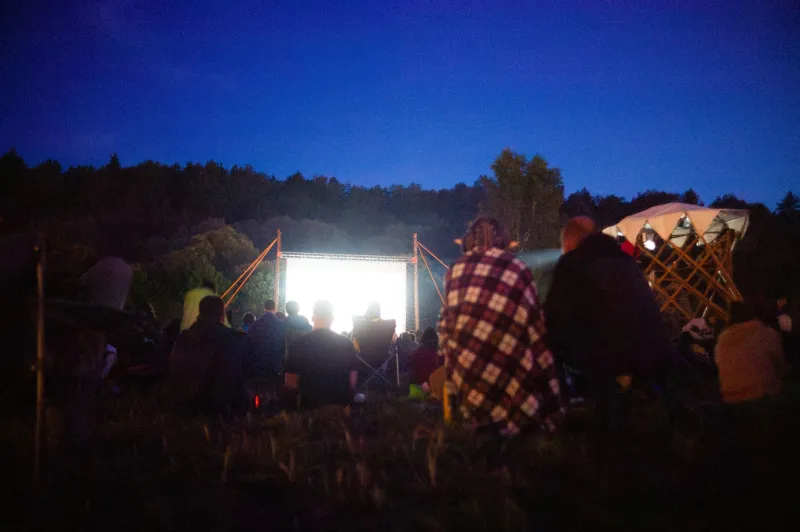
There’s a specific sound that follows a great festival movie: car doors, gravel, and somebody saying, “No, but wait—” That’s the real encore. Not the Q&A microphone. Not the end credits. The parking lot. The bar. The group text that keeps going until 2 a.m. If you’ve spent any time at US regional festivals—Sidewalk in Birmingham, True/False in Columbia, the Chicago Critics Film Festival, any of the smaller rooms where the projector hum is part of the experience—you know the feeling. The movie ends, and the conversation starts. That conversation is not a bonus feature. It’s part of the moviegoing experience.
The Q&A Is the Warm-Up
Festival Q&As have their place. They can be generous, funny, and illuminating. They can also be a little stiff. A moderator asks about the budget. An audience member asks where the film was shot. The director gives a thoughtful answer that sounds like it’s been given before. Then the lights come up, and everyone files out with a half-formed thought they didn’t want to say into a microphone.
The parking lot is where that thought gets finished. Or argued with. Or abandoned. It’s less performative because nobody’s recording. You’re not trying to land a quote for a podcast. You’re just trying to figure out whether the ending worked. That’s a different kind of attention.
Why the Parking Lot Matters
Word-of-mouth has always been the lifeblood of independent film, but at regional festivals it’s also the social texture of the event. You run into the same people at three screenings in two days. You start to recognize the person who always asks the first question. You overhear a stranger’s take in the concession line and realize they saw something you missed. By Sunday, the festival has a temporary canon—films everyone is talking about, films everyone is defending, films everyone is politely calling “interesting.”
That’s not noise. That’s community criticism. It’s the difference between a movie as a product you consume and a movie as a thing you share. And for indie filmmakers, it’s often more valuable than a star rating. A parking-lot debate can send a film to a friend in another city. A Letterboxd thread can keep it alive for months. A single passionate recommendation from a stranger at a festival can do more than a paid ad.
A Cinephile’s Guide to Arguing Better
Here’s the catch: not every post-screening conversation is good. Some are just people stacking hot takes like Jenga blocks. Some are performative contrarianism. Some are a guy explaining the movie to the person who actually made it. If we want the parking lot to be part of the art, we have to treat it like it matters.
A few practical rules of thumb:
- Ask what someone noticed, not what they rated. “What stayed with you?” opens a conversation. “What did you give it?” closes one. You can get to the rating later, if you must.
- Disagree with evidence. “I didn’t buy the ending” is fine. “I didn’t buy the ending because the film spent two hours teaching us that she never lies, and then she lies” is better. It keeps the argument about the movie instead of about who’s smarter.
- Wait 24 hours before posting the takedown. The festival high is real, and so is the festival fatigue. Some of the best conversations happen after a night’s sleep. Some of the worst happen in the parking lot at midnight.
- Talk to a stranger. Festival crowds are unusually friendly. If you overhear a take that interests you, say so. The worst thing that happens is a five-minute conversation about a movie you both saw.
- Use Letterboxd as a continuation, not a scoreboard. A short, specific note about a sound choice or a performance can be more useful than a clever one-liner. The goal isn’t to win the review. It’s to keep the movie in circulation.
Leave the Hot Take at the Door
There’s a temptation, especially online, to turn every disagreement into content. Festival season makes that worse because everyone is seeing a lot of movies in a short amount of time. It’s easy to mistake exhaustion for insight. It’s easy to mistake a contrarian opinion for a brave one.
The best festival conversations I’ve had weren’t the ones where someone “destroyed” a movie. They were the ones where someone changed their mind halfway through a sentence. Or admitted they didn’t get it. Or made me see a scene differently. That’s not a hot take. That’s criticism.
The Movie Keeps Playing
A film doesn’t stop when the credits roll. It keeps playing in the parking lot, in the group chat, in the line for the next screening. That’s especially true for independent films that don’t have a marketing budget to remind you they exist. The audience is the reminder. The argument is the ad.
So if you’re at a festival in 2026 and the movie ends with a room full of people who aren’t quite ready to leave, don’t rush to your car. Stick around. Ask somebody what they thought. Disagree nicely. Listen. The best movie of the weekend might be the one you’re still arguing about when the lot empties out.