Small Rooms, Honest Faces: What Ten Strangers Can Tell an Indie Director
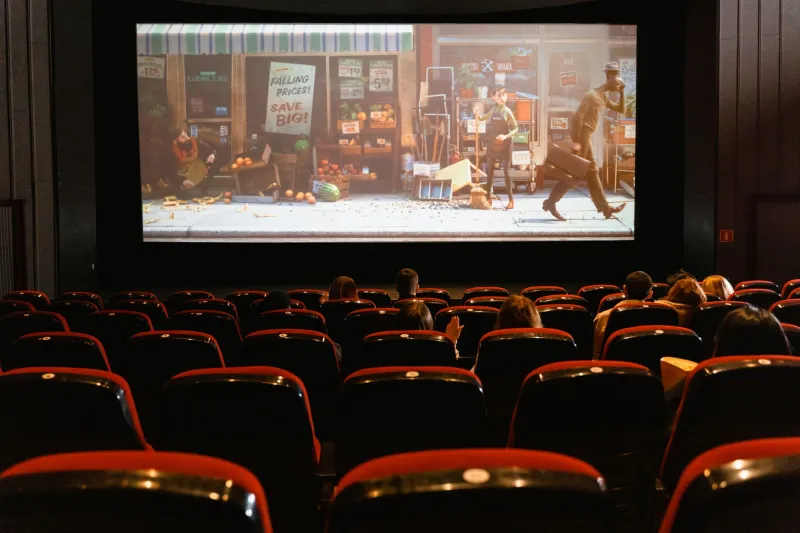
The room is usually someone's apartment, a borrowed conference room, or a post-production house after hours. There are ten chairs, maybe twelve. A laptop is hooked to a projector. The director stands near the door, trying to look casual, holding a notebook that will soon be full of handwriting they may or may not want to read.
This is the other test screening. Not the studio kind with recruited audiences, dials, and a moderator reading questions off a card. The tiny indie kind, where the pizza is cold, the water bottles are room temperature, and the audience is a mix of friends, colleagues, and a few people who answered a post on a local filmmaking forum. It is low-stakes in theory. In practice, it can feel like standing in a hallway while strangers listen to your heartbeat.
The Studio Machine vs. the Folding Chair
Studio research screenings are built to reduce uncertainty. Audiences are recruited to match a demographic. They fill out scorecards. They turn dials during the movie. The data comes back in graphs: where attention dipped, which character tested well, which ending scored highest. It is expensive, efficient, and designed to answer questions before the marketing money gets spent.
An indie ten-person screening answers different questions. It does not tell you what “the audience” wants. It tells you what these ten people noticed. That is a smaller, stranger, more human data set. Someone laughs at the wrong moment. Someone checks their phone during the scene you were sure was the emotional center. Someone stays after and says, “I liked it, but I didn't understand why she left.” And you stand there, nodding, trying to decide whether that is a note or just a person.
Body Language Doesn't Politely
Directors learn to watch bodies in these rooms. Not in a creepy way — in a survival way. When a scene is working, the room gets still in a particular way. People stop shifting. They lean toward the screen. They forget the snack table. When a scene is dying, the room tells you: a knee starts bouncing, a phone comes out, two people exchange a look that says “how long is this?”
One director I know calls it “the pulse check.” He sits in the back corner of every small screening and watches the silhouettes. If he sees three people reach for their drinks during a dialogue scene, he knows the scene is too long. If he sees someone laugh and then look around to see if anyone else laughed, he knows the joke is not landing. If he sees a person cry, he does not trust it until he sees them wipe their face and look embarrassed. Real emotion usually comes with a little shame.
The strange honesty of a nearly empty room is that there is nowhere to hide. In a theater of two hundred, a boring stretch can be absorbed by crowd energy. In a room of ten, one bored person is ten percent of the audience. You feel it. You cannot blame the room. You cannot blame the projection. You just have to sit there and learn.
The Exit Comment You Can't Unhear
Afterward, there is usually a conversation. It is not a Q&A with a moderator. It is a huddle. People are polite, but the useful comments have a way of arriving sideways. “I loved the sister,” someone says, and you realize the sister is barely in the movie. “The ending was brave,” someone else says, which might mean “I did not like it” or might mean “I am being nice.” Then there is the one comment that lands like a stone in a pond: “I didn't know whose movie it was.”
That one can ruin a night. It can also save a cut. An indie director does not need ten people to agree. They need one person to say the thing that clarifies the problem. Maybe the film has two protagonists and only room for one. Maybe the first act is doing work the audience does not need. Maybe a scene is beautiful but belongs to a different movie. Small screenings are less about consensus and more about the single sharp note that cuts through the polite noise.
When the Pulse Flatlines
There is a specific horror in watching a scene's pulse flatline. It happens in slow motion. The dialogue is still going. The actors are still acting. But the room has left. You can see it in the eyes: they are watching the screen, but they are no longer inside the story. They are outside, looking at the movie, wondering when it will end.
Some directors respond by cutting the scene. Others respond by defending it. The best response is usually to wait. A small screening is not a court. It is a signal. If one scene flatlines for ten people, that does not automatically mean it is broken. But if it flatlines for three different rooms of ten, you have a pattern. And patterns are what editing is for.
The Case for Keeping It Small
Here is the question worth asking: can smaller feedback actually protect a film's heart? The studio model can sand down a movie until it fits a test score. The indie ten-person room can do the same thing if a director is not careful. You can chase every comment and end up with a film that nobody dislikes and nobody loves. That is the risk.
But small rooms have one advantage: they are less likely to give you a fake answer. A recruited audience is used to being measured. A room of ten friends and strangers is not. They fidget. They whisper. They leave early. They say the wrong thing. And somewhere in that messy, low-stakes honesty, a director can find the difference between a note that serves the film and a note that serves someone's taste.
For cinephiles, this is the part of the process that rarely makes the festival program. Before the premiere, before the reviews, before the Q&A mic goes live, there is a folding chair and a laptop and ten people who cannot lie very well. That is not glamorous. But it is where a lot of independent films find their final shape — not by learning what everyone wants, but by learning what this particular story needs to survive.