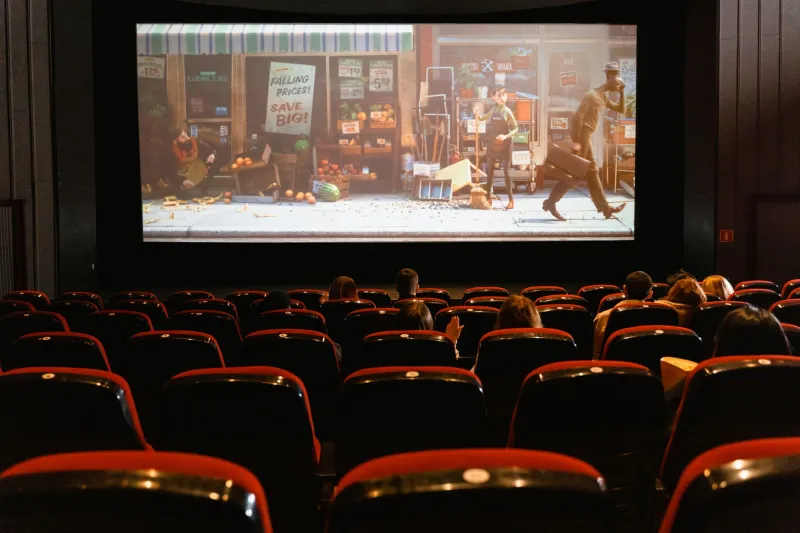
The Fine Print Is the Story: Decoding an Indie Film's Credit Scroll
The last shot lands. The score drops away. Half the theater reaches for a coat — and then the scroll begins. For anyone who has actually pushed a micro-budget feature over the finish line, those ninety seconds are the most candid document the movie contains. Pitch decks round up. Budgets get massaged. The credits don't.
The Scroll Is a Ledger
Ask an editor what an end crawl costs and you get a number that sounds absurd for text on a black screen: a few hundred bucks, sometimes a couple thousand once you factor in the render, the QC pass, and the reshuffling that happens every single time a name changes.
"The crawl is the only part of the movie where nobody's pretending," says Dana Whitlock, a Portland-based editor who has cut four features under half a million dollars. "You can watch a rough cut and guess where the money ran out. You read the credits and you know."
What she means is that the scroll is a map of how the thing got made. Two camera operators instead of five. A colorist who is also the director's roommate. A sound mix credited to a company that, one Google search later, turns out to be a garage in Reseda with a very good reverb plugin. Nobody puts that in a press release. Everybody puts it in the crawl.
'Special Thanks' Is a Diplomatic Post
The single most negotiated real estate in independent film isn't the opening title card. It's the soft-focus zone near the end where gratitude lives. Producers describe the special thanks list the way a scheduler describes a wedding seating chart: every name is a relationship, and every omission is a message.
Marisol Reyes, who produced two festival-circuit features before moving into post supervision, keeps what she calls a "grudge column" in her credit spreadsheet — names that were promised a card and then quietly dropped when the film landed a sales agent who wanted a tighter crawl. "It's not personal," she says. "Except it is completely personal. Somebody's grandmother flew out to set. She's getting a card."
There's a hierarchy that veterans read like a subway map. A possessory credit up front. An "in association with" card that signals which financier actually mattered. A producer who left the project in month three but kept a credit because the paperwork said so. And then the long tail of thanks, where the politics get very small and very real.
Backer Tiers and the Eight-Point Font
Crowdfunding changed the shape of the scroll. A Kickstarter campaign with 700 backers can add three full minutes of names, and suddenly an editor is typesetting at seven or eight points, two columns, with a scrolling speed fast enough to induce motion sickness.
Whitlock has a rule: backers go at the very end, after the licensing blocks, so the audience that stays for the fun of it gets the payoff. "The trick is not making them feel like fine print," she says. "They paid for the movie. They should be the last thing you see, not the thing you squint at."
Some filmmakers have gotten creative — backer names woven into the set dressing, or a QR code at the tail of the crawl. Others fight it out in the render queue at 2 a.m., re-exporting a four-second fix because a college friend's name is spelled with an extra N.
What the Fine Print Can't Say
A few things are dictated by forces outside the filmmakers' control. Union agreements, music licenses, and the E&O insurance policy all come with credit obligations, and a distributor acquiring the film will often add its own cards — which is why the version that played at a festival sometimes has a different crawl than the one that ends up on streaming, longer by a logo and shorter by a thank you.
Then there are the credits that exist as quiet warnings. The producer who is listed but whose involvement ended in litigation. The "additional editing by" card that covers a very painful six weeks. The thank-you to a festival programmer who has since stopped returning calls.
"People think credits are vanity," Reyes says. "They're receipts. They're the paper trail of every favor, every free lunch, every friend who drove three hours with a C-stand in the trunk."
The Last Card Before the Logo
Watch a micro-budget film to the end and you'll often spot a final, hand-placed card — a thank-you to a parent, a note to a crew that worked for deferred pay. It's usually the only thing in the crawl that wasn't negotiated by anyone.
It's the part nobody puts in the contract. It's also the part that tells you most about the room the movie was made in.