The Script Gets a Haircut Before the Camera Shows Up
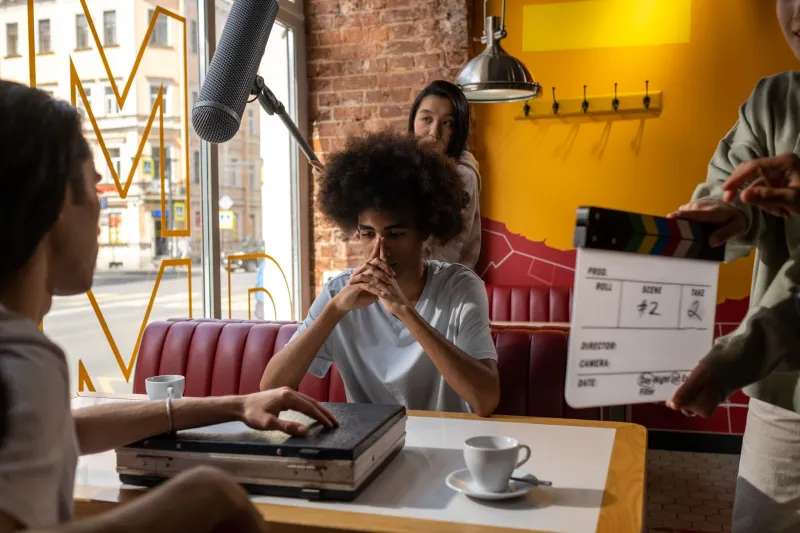
On an indie set, every dollar has a job. The camera rental, the permits, the second tank of gas for the production van — none of it is casual. So it has always struck me as odd that one of the most useful tools in the filmmaker’s kit often gets treated like a polite formality: the table read.
A table read is not a rehearsal. It is not a networking event with scripts. Done right, it is the first honest edit of the movie, a low-cost preview of every place the screenplay is about to fail or fly. For first-time filmmakers, especially those working outside the coastal industry bubble, it may be the only time the whole story is heard out loud before the money is spent.
The Room Hears What the Page Hides
A screenplay is a strange document. It contains dialogue, action, mood, and intention, but it does not contain the thing that makes a movie: time. In a room, time becomes audible. A joke that looked sharp on page 42 lands with a thud. A monologue that read as profound on the page starts to sound like a TED talk with a plot. Two characters who seemed distinct in your head suddenly share the same rhythm, the same vocabulary, the same way of saying exactly what they mean.
That is the read-through’s first gift. It makes the invisible visible by making it audible.
Directors I have spoken with describe the same small shock: the script is never as clear as they thought. Actors ask questions that expose missing motivation. A supporting character disappears for thirty pages and nobody in the room notices until someone asks where they went. A reveal that depends on the audience not knowing something becomes obvious by page 12 because the dialogue keeps winking at it.
Casting directors feel this differently. They are not just listening for who can act. They are listening for who can carry the movie’s particular weather. A great actor can make a thin line work; a mismatched actor can make a good line sound like a corporate training video. The table read is where chemistry stops being a vibe and becomes evidence.
What Usually Gets Cut, and What Shouldn’t
The most common note from a first table read is simple: too much explaining. Indie scripts often arrive with a case of nervousness. The writer is afraid we will not understand, so every character announces their job, their wound, and their relationship to the theme before the first act is over. In the room, that nervousness sounds like noise.
What gets cut first is usually throat-clearing. The three lines before the real line. The greeting before the argument. The speech that summarizes what the previous scene already showed. Smart filmmakers leave the read-through with a list of pages where the script is talking to itself.
But there is a trap. The same room that exposes overwriting can tempt a filmmaker to cut the quiet stuff that actually holds the movie together. A long pause, a strange aside, a character beat that does not advance plot — these can feel slow in a read-through because there are no faces, no costumes, no rooms, no camera. The read-through is not a finished movie. It is a diagnostic. Cut the redundant, not the alive.
One practical rule: mark every place the room laughs when you did not intend a laugh, and every place it goes silent when you expected a reaction. Those are not final verdicts. They are clues.
Casting Is Editorial, Too
The table read is also a casting audit. Not in the sense of firing someone after one bad pass, but in the sense of hearing whether the ensemble makes sense as a whole. A lead can be wonderful alone and still sound stranded next to a supporting actor with a completely different engine. A comedic actor can pull focus from a dramatic scene without meaning to. A quiet performer can vanish in a room and then own the screen on the day.
This is why some casting directors like to hear the script with the actual actors before final decisions are locked. The read-through does not need costumes or blocking. It needs voices, ears, and a willingness to admit that the movie on the page is not yet the movie on the screen.
For regional productions, there is an advantage here. Local actors often know the texture of the place you are shooting. They can tell when a line sounds like a writer who has never stood in that diner, that church basement, that parking lot. That kind of note is worth more than a hundred polite compliments.
The Regional Advantage: Small Rooms, Honest Notes
In a smaller film community — Birmingham, Albuquerque, Milwaukee, Memphis, wherever the budget and the story happen to land — the table read can be a genuinely local event. Invite actors who know the area, a couple of trusted readers, and maybe one person who has no reason to flatter you. Keep the room small enough that people feel allowed to be honest.
The goal is not a party. The goal is a controlled collision between the script and other people’s ears. A community theater, a library meeting room, a borrowed conference room with bad coffee — none of that matters. What matters is that the room is safe enough for actors to play and candid enough for the director to listen.
How to Run One Without Wasting It
A few practical moves can make the read-through worth the afternoon.
First, cast it cold. Do not over-rehearse. You want to hear the script as a first audience will hear it, not as a polished presentation.
Second, assign a reader for stage directions and keep them neutral. A dramatic reader can accidentally perform the movie and hide its problems.
Third, record the audio. You will forget the exact moment the room went quiet. The recording will not.
Fourth, take a break before feedback. Ask specific questions: Where did you get lost? Which character did you want to follow? Where did you stop believing? Avoid asking whether people liked it. That question produces politeness.
Fifth, write down page numbers, not impressions. A note that says the middle drags is useless. A note that says pages 31 to 38 repeat the same argument is an edit.
Finally, do not defend the script in the room. You can decide later. The read-through is a listening exercise, not a debate club.
The First Edit Is a Conversation
The table read will not make your movie. It will not replace rehearsal, storyboarding, or the brutal wisdom of the edit bay. But it can do something the edit bay cannot: it can show you the story before you have paid for the mistakes.
For an indie filmmaker, that is not a small thing. The movie begins when the script stops being a document and starts speaking back. The smartest teams listen early, cut what needs cutting, protect what has a pulse, and walk onto set with fewer illusions and a better movie. That is the first edit — and it costs almost nothing but honesty.